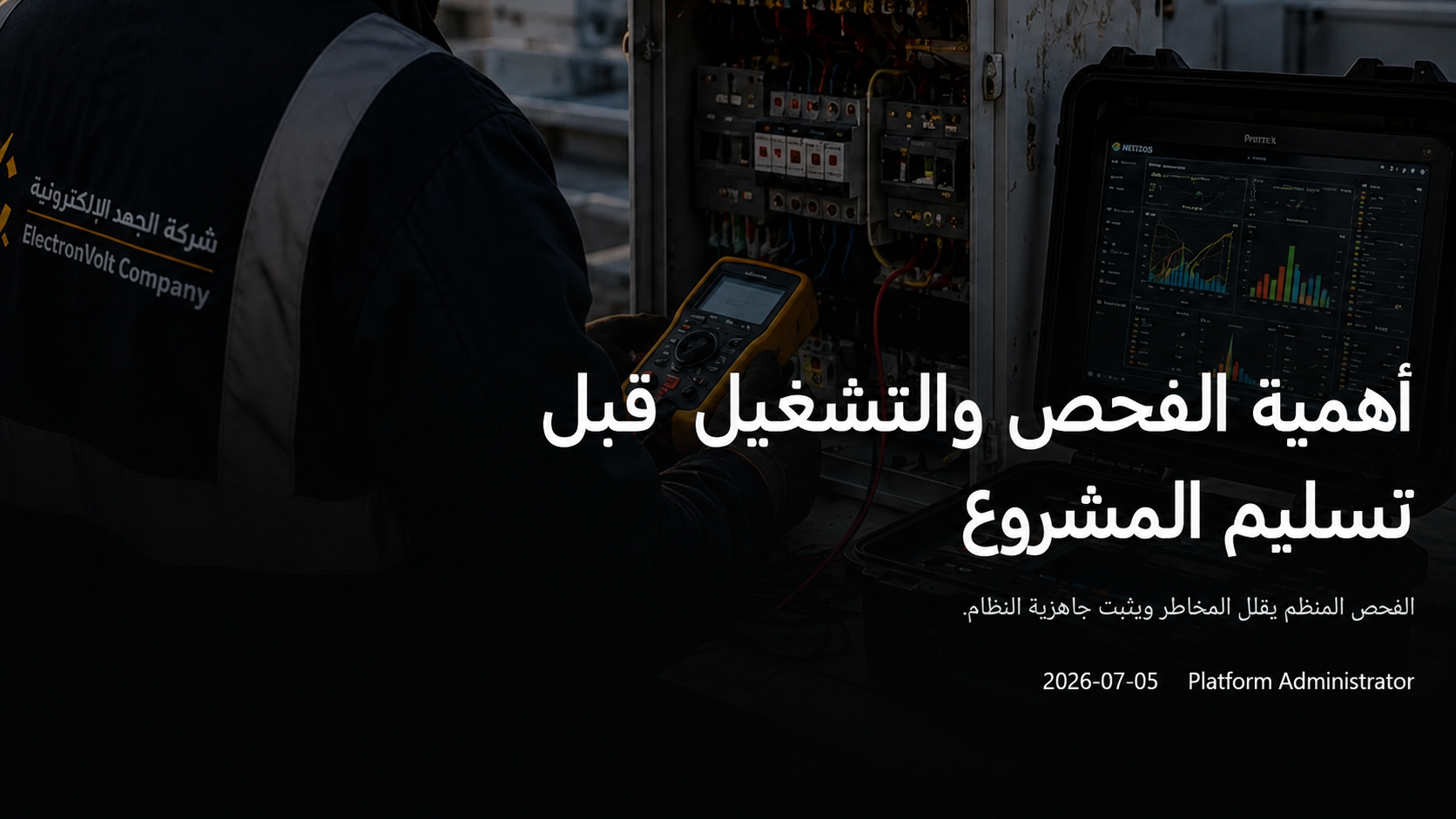
The Importance of Inspection and Commissioning Before Handover of a Solar Energy Project
The inspection and commissioning process before handing over a solar energy project is one of the most critical stages to ensure the system operates efficiently, safely, and reliably over the long term.
Installing solar panels, inverters, and other system components does not mean that the project is complete. A professional inspection and commissioning process must be carried out to verify that all components are properly installed, tested, and ready for operation before the system is delivered to the customer.
For solar energy projects in Jordan, where solar systems are widely used to reduce electricity costs and provide long-term energy savings, proper testing and commissioning play a key role in ensuring system performance and customer satisfaction.
What Is Solar System Inspection and Commissioning?
Inspection and commissioning is a series of technical procedures and performance tests performed after completing the installation of a solar power system.
The purpose is to confirm:
Correct installation of all system components.
Electrical safety and proper connections.
Expected energy production levels.
Compliance with technical and safety standards.
Reliable system operation.
This process helps identify any potential issues before the system starts operating, reducing the possibility of future failures and unexpected maintenance costs.
Main Inspection Steps Before Delivering a Solar Energy System
1. Solar Panel Inspection
During the inspection process, technicians verify:
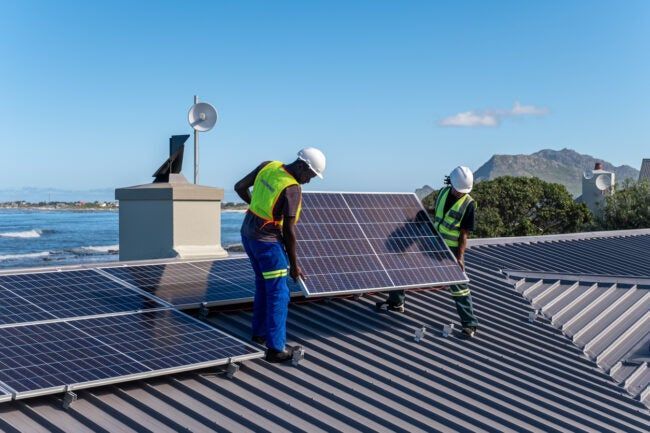
Proper installation and secure mounting of solar panels.
No physical damage or defects in the panels.
Correct tilt angle and orientation.
Proper connections between solar modules.
Any installation error can directly affect the energy production and overall efficiency of the solar system.
2. Electrical Connection Testing
Electrical safety is one of the most important aspects of solar system commissioning.
The inspection includes checking:
DC cables and connections.
AC wiring and distribution points.
Connectors and terminals.
Grounding and protection systems.
These tests ensure safe operation and minimize the risk of electrical faults.
3. Inverter Inspection and Testing
The inverter is considered the heart of the solar energy system because it converts the electricity generated by solar panels into usable power.
During commissioning, technicians check:
Proper inverter operation.
Correct system configuration and settings.
Error messages or warnings.
Monitoring system connection and functionality.
A properly configured inverter ensures maximum system efficiency and reliable performance.
4. Solar System Performance Testing
After completing the installation, the system is tested to measure:
Voltage levels.
Current output.
Actual power generation.
Overall system efficiency.
These measurements confirm that the solar system is operating according to the approved design specifications.
Why Is Commissioning Important for Customers?
A professional commissioning process provides several important benefits:
Ensuring Installation Quality
It confirms that all installation work has been completed according to engineering standards and manufacturer requirements.
Reducing Future Maintenance Issues
Detecting problems early helps prevent unexpected failures and reduces repair costs.
Maximizing Energy Production
A properly tested and configured system delivers the highest possible energy output.
Building Customer Confidence
Receiving a fully inspected and tested solar system gives customers confidence that their investment is ready to perform efficiently from day one.
The Importance of Inspection for Solar Projects in Jordan
Due to Jordan's climate conditions, including high temperatures, dust, and strong solar radiation throughout the year, professional inspection is essential to ensure:
Long-term system durability.
Stable solar panel performance.
Electrical safety.
Continuous energy production.
A well-tested solar system is better prepared to handle environmental challenges and maintain high efficiency throughout its operational life.
What Should Customers Receive When a Solar Project Is Delivered?
A professional solar company should provide customers with:
inspection and commissioning .
Explanation of system operation.
Warranty information.
Monitoring system access details (if available).
Recommended maintenance schedule.
These documents help customers understand their system and maintain optimal performance.
Our Commitment to Solar Project Quality
At ElectronVolt Co., we believe that the success of a solar energy project depends not only on high-quality equipment but also on professional installation, testing, and commissioning.
We follow strict quality procedures throughout every project stage, including:
Site assessment.
Solar system design.
Professional installation.
Performance testing.
Final commissioning and customer handover.
Our goal is to deliver reliable solar solutions that provide maximum efficiency, safety, and long-term value.
Conclusion
The inspection and commissioning process before handing over a solar energy project is not an optional step; it is an essential part of delivering a safe, efficient, and reliable solar system.
Choosing an experienced solar company that follows proper testing procedures ensures that your investment performs efficiently and continues producing clean energy for many years.
Awareness Articles
Why Testing and Commissioning Matter

Structured testing reduces risk and confirms readiness.